Sunday, February 26, 2012

Food and drink in Malawi


I promised a post about the foods and beverages of Malawi, and here it is. First, let's cover the basics:

Chicken. Chicken is definitely the staple meat here, in all its varieties. Roasted chicken. Stewed chicken. Piri-piri chicken. "Southern fried" chicken. Just around work, there's a former Nando's (now called "The Grill House", but serving a strikingly-similar menu...), Galito's (more piri-piri chicken), "Luv Dat Chicken" (KFC-esque), and I'm certain several others that I'm missing. And those are just the North American-style fast food joints - there are several local takeaway places that serve similar menus of chicken + chips/nsima/rice. I see goat and beef on menus, too, but chicken is easily the most prominent. 
Chicken and nsima from Summer Park restaurant, Lilongwe
Nsima. Not by itself, of course (that would be like saying you need to try rice while in China), but it's a great vehicle for chicken and leafy greens (the most commonly served accompaniments). Nsima is similar in appearance and consistency to slightly solidified mashed potatoes (it's solid enough that you can rip pieces off and pick things up with it), and by itself, is mostly tasteless. I'm fond of eating it with stews, so I have something to dip it in (much as I enjoy Indian naan or Ethiopian injera), but others will eat it accompanying grilled chicken or steak. I've discovered a great place to get it right by work (cheap, too: 450 kwacha, or just over 2.50$, for the smallest portion, pictured here). Now I just need to figure out how to reproduce the chicken stew in vegetarian fashion!

Ok, so you could have read about those two things in any Malawi guidebook - they're the traditional staples. (If you're feeling really scholarly, you might take a look at this article, which goes into far more depth about nshima and its place in Zambian culture). 

Here are some other, less-anticipated, aspects of food and drink that I'd like to highlight:

Wednesday, February 15, 2012

Life in Malawi

Some people are probably curious what my life is like down here. Where do I live? What do I eat? Are things expensive? etc.

Well, to give an idea, here's a day in the life:

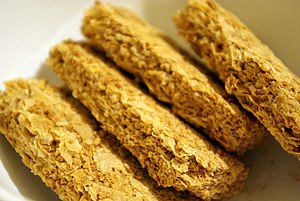
Weet-Bix
I get up around 6am. By that time, I've usually slept through both the local mosque's alarmingly loud call to prayer (around 4:30am) and the sunrise (around 5:30am), so it's not as early as it sounds.

I haven't quite figured out a good breakfast routine yet, but so far I've been eating either a hard-boiled egg (eggs are cheap) or a Weet-bix biscuit with milk. There isn't a great selection of cereal available (and it's quite expensive). I haven't yet found a way to make the Weet-bix taste like anything other than cardboard, but I have a box of them to get through, so I plow on.

Assuming the water is working (and really, it has only been out one day of the three weeks I've been here so far), my morning routine isn't otherwise greatly different from what it is in Canada. With luck, my little lizard friend will make an appearance in the bathroom at some point (he comes in and out and often hides behind the water heater).

Thursday, February 9, 2012

Guavas in the garden

Yesterday morning, the water was out at home. That's fine, I thought, I can go one morning without a shower, can't I? This never happens back home, how exciting! (I'm told this excitement will soon give way to anger, denial, and finally, acceptance.)

Then I got to work, and found the power was out and had been for a while. All the backup power sources had drained and, consequently, all the computers were dead and the office had heated up to an ambient temperature best described at this point as "pleasantly warm".

My laptop battery died around 10am, and by lunchtime, although the office temperature had probably not increased significantly since morning, I was ready to describe the conditions as "sweltering". As a result, I decided to tag along on an outing with Dan, and captured what is perhaps a very uniquely African photo: 
Standing in the CEO's garden, inspecting a generator
and eating guavas freshly picked off a nearby tree.

Monday, February 6, 2012

Why you should care about co-operatives

Are you a member of a co-operative? 
Yes? No? Not sure? 
(I am curious! Leave a comment. :)

Photo from Ocean Spray media library, 'cause cranberry bogs are awesome
Did you know...

...that Ocean Spray cranberry juice, Natrel milk, and Camino chocolate are all produced by co-operatives?

...that Canada has one of the highest per capita credit union memberships in the world? According to the World Council of Credit Unions, 46.2 per cent of the economically active population are members of a credit union or caisse populaire. 

...that Alphonse Desjardins founded the first North American caisse populaire/credit union in 1901 in Lévis, Quebec?

...that 35% of the world's maple syrup is produced by co-operatives in Quebec?

...that the United Nations has declared 2012 the International Year of Cooperatives?

Even if the extent of your co-op savvy is limited to a vague understanding that you have to "become a member" in order to shop at Mountain Equipment "Co-op", fear not! I was in the same boat a few months ago, so in the spirit of the International Year of Co-operatives (and of my co-op-related internship), I thought I'd share some of the knowledge I've since gained.

Thursday, February 2, 2012

Lake Malawi


With the Canadian credit union coaches in town for two weeks, I had the chance this past weekend to join them in a whirlwind tour of central Malawi's sights.

I was told that I would be picked up around 6:45 on Saturday morning, which in practice means it was close to 7:30 before I tucked myself into the middle seat of a 4x4 pickup (otherwise filled with driver Dalitso, MUSCCO employee Jovita, and coaches Lennie and Rocio). Our first stop would be Liwonde National Park, about 300km southeast of Lilongwe. 

Friday, January 27, 2012

Arrival in Africa

I arrived in Lilongwe last Saturday night, the 21st, after approximately 26 hours of traveling. That's 4 flights, 5 airports, and 3 continents. 

Stairs leading to gate 3
The moment I got off the plane in the Nairobi airport, I knew I was in Africa. No airy glass and metal terminal here, rather a narrow and humid hallway, with a cracked tile floor and a 1970s decor. It was lined on one side by shops selling typical airport fare, and on the other side by benches housing a variety of travellers, including groups of African nuns in full habit. I ducked into the bathroom, where I got to use my first (and so far only) squat toilet of the trip, much to the admiration of the other foreigner there. (I turned out to be on the same flight as that woman, who in turn had run into the woman sitting next to her earlier in the bathroom... this was not a particularly large or busy airport, in other words). 

Past the security checkpoint
I wandered down the terminal and found my gate at the very end of the hall, down a narrow set of stairs that looked more like they'd lead to a restaurant bathroom than to a security checkpoint and boarding area. I was handed a laminated boarding card in exchange for my ticket, went through the 70s-era security checkpoint, and had a seat. The change of pace ("African time", some call it) was evident - no hum of activity at the gate, none of the urgency you'd see in a European or American airport. In fact, aside from the people working the security checkpoint, I didn't see any airline or airport employees around at all. About 15 minutes before the flight was scheduled to leave, the doors to the tarmac were suddenly opened and we lined up, turned in our boarding cards, and walked the 50m to the plane. I cast a brief glance at the passing baggage cart, wondering whether my checked luggage would make it to Lilongwe intact and on-time - accounts from past travellers to Lilongwe suggested the odds were not high.

Saturday, January 21, 2012

Airport Adventures

Some rambling notes on my adventures through airports so far:

Ottawa:


  • 13:15. Arrive at the airport. Westjet can check my bags, but not me, all the way through to Lilongwe. I need to pick up my remaining boarding passes at the gate in Toronto. 


Toronto:
  • 15:00. Talk a boarding pass checker into letting me into a restricted area without the right boarding pass. Reach my gate and find it unmanned. I suppose I am over 3 hours early. 
  • 15:05. Scan the walls and pillars for a power outlet, find what seems like a quiet spot at the back with access to power, and then realize the empty area nearby is a play area for children ages 2-5. Escape with great haste. 
  • 15:15. Spot some sort of public health containment team stationed two gates over from mine. I count 4 cops, 9 paramedics/doctors/medical support staff, 3 stretchers, and 2 women in Public Health Agency of Canada vests. Contagion? I grab a seat with a view.
  • 15:25. Contaminated flight arrives, but no one's getting off. No one is getting on, either. Who is patient zero?  
  • 15:40. People are finally coming off the plane. Paramedics and cops are leaving. Stretchers are empty. How anticlimactic. 
  • 15:55. Find a power outlet and seat outside the play area's blast radius. 
  • 16:00. Plane from Amsterdam arrives at the gate. No Public Health officials milling around for this flight, just border control. 
  • 17:15. Finally get my remaining boarding passes.
  • 18:15. On-board and thrilled to discover there is no one in the seat next to mine. Makes the fact that there are 2 toddlers and a bored 6-year-old within a 3-seat radius more palatable.